Is it a dino?
Brown or red slime in a reef tank is usually cyanobacteria, diatoms, or dinoflagellates. Look at it through a hand lens or microscope and follow the chart. New to this? Start with what a dinoflagellate is.
How dinos move
Motion is the best clue, so take a video if you can.
Not sure? Send me your photos or video and I will tell you what I think. And do not start killing a bloom until you know whether it is toxic: see the safety notes.
Hints from the tank
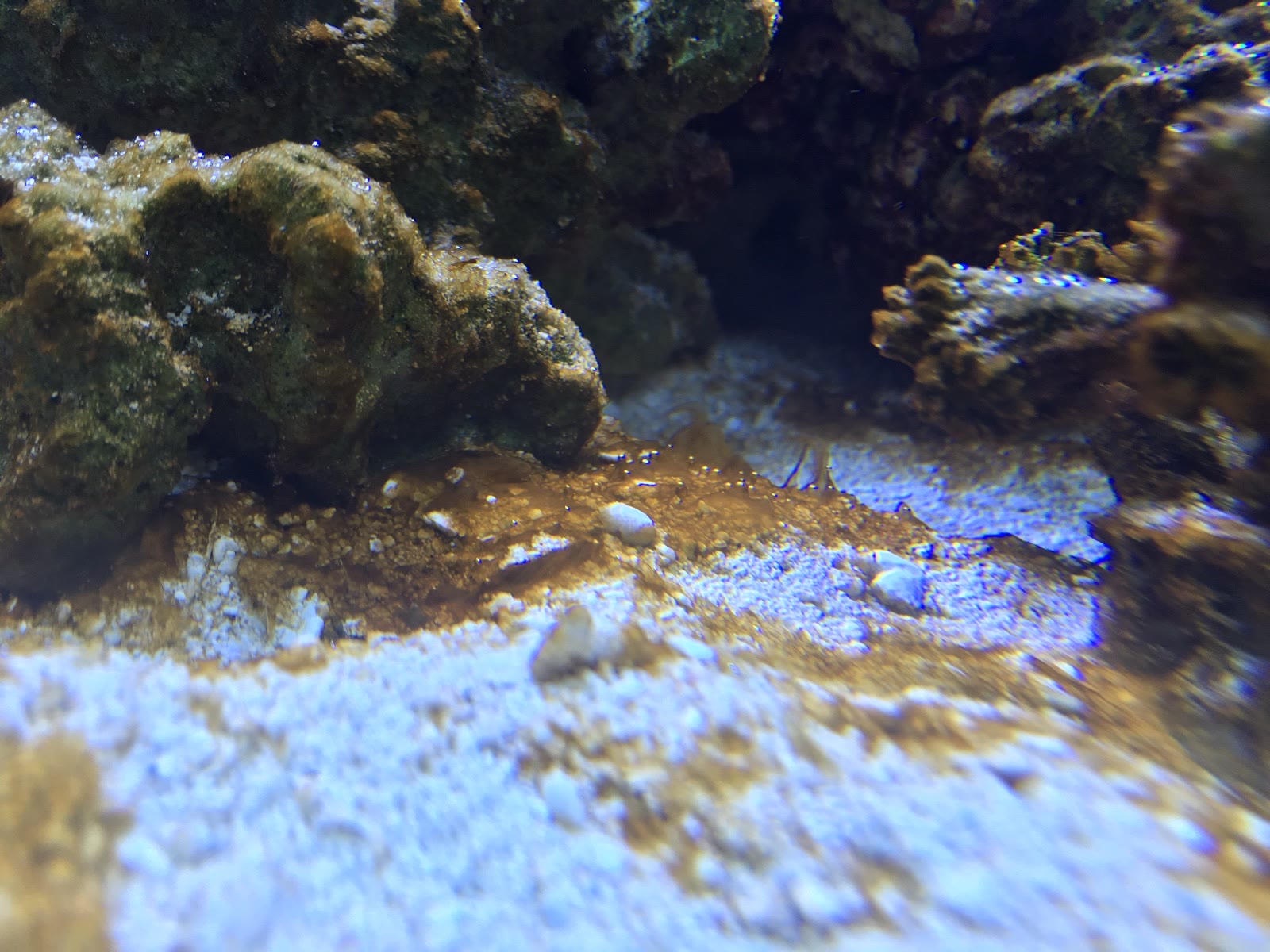
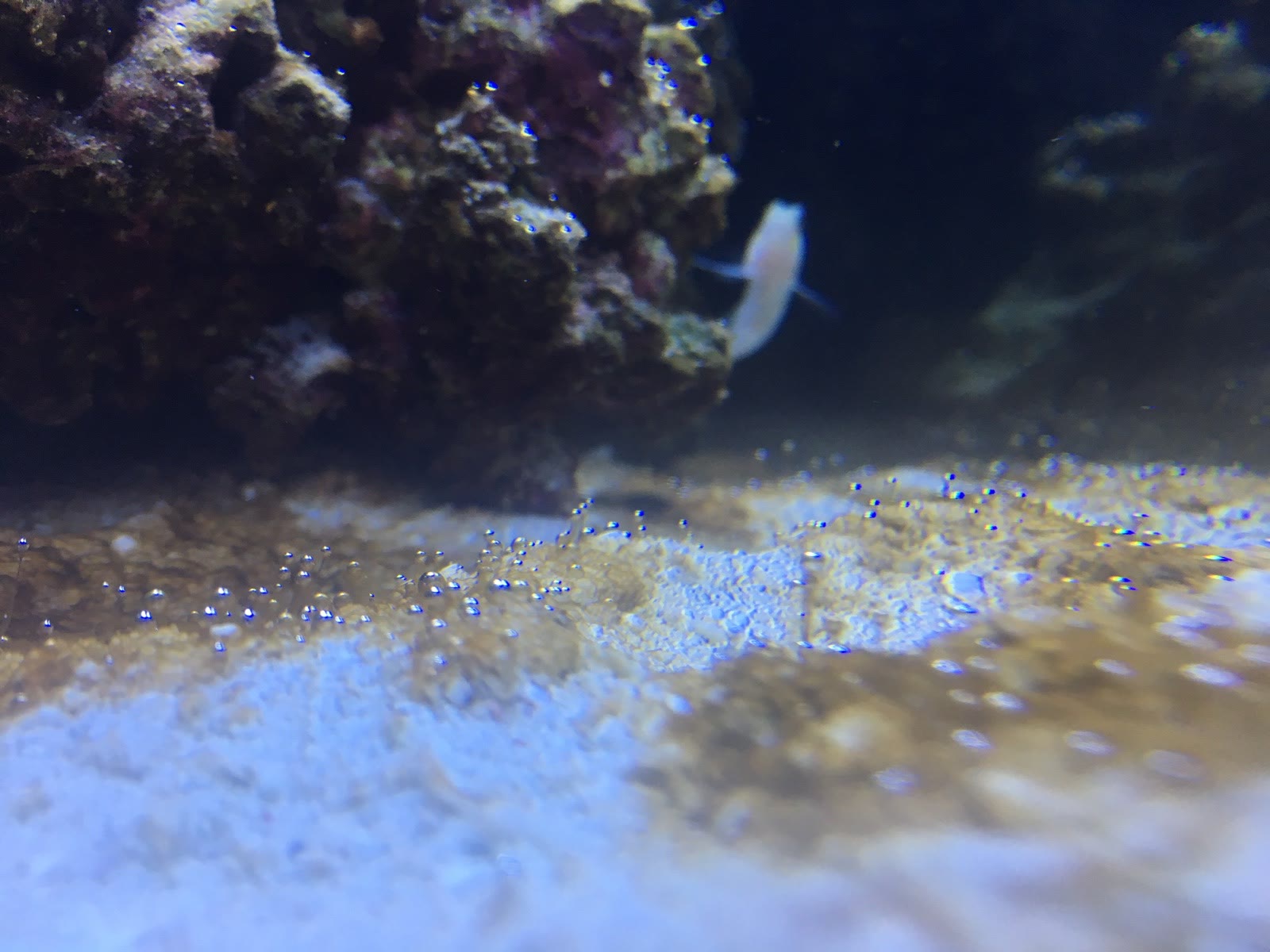
Dinos often form a brown, amber, or red-brown film over sand and rock that comes off in strings and traps bubbles. Cyano is more often a red, purple, or black mat in low-flow spots, and diatoms a dusty brown coat on new tanks. The tank alone cannot tell you, but it is a clue.
What tends to cause each one
A rule of thumb from the outbreaks I have seen, not a law.
Why "algae" is not a useful word
It is a bit like saying "flying things": flies, bats, birds, and airplanes all fly, but they are not related. Cyanobacteria, red algae, green algae, diatoms, kelp, and dinoflagellates are all called algae, are only distantly related, and need different fixes. That is why the first job is working out which kind you have. If I was giving advice on dealing with a pest in your vegetable garden, I would have very different advice for dealing with rabbits as opposed to elephants, even though both are mammals.
Finding a dino does not mean you have a dino problem
When I look at sand from reef aquariums under a microscope, I can usually find some dinoflagellates. They are a normal part of the community, they cause no trouble, and you cannot see them without a microscope. In the same way, people often send me algae mats that are mostly cyanobacteria, and I can often find a few dinos mixed in. I would not call that a dino problem.
What matters is what is making up most of the bloom, the thing you can actually see growing in your tank. Only worry about dinos when they are the main contributor.
For a detailed guide to dealing with a bloom once you know what it is, see the Dinoflagellate Guide (written by another aquarist) and my treatment notes.