ID guide › Dinoflagellates
Other dinoflagellates
The small, unidentified dino
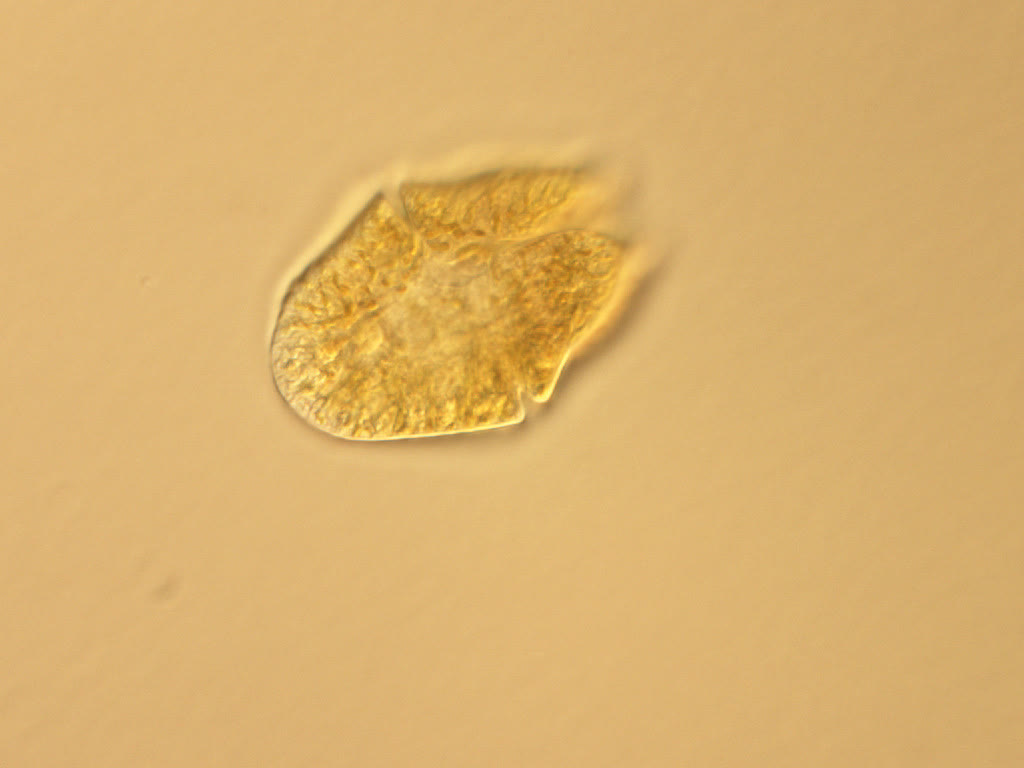
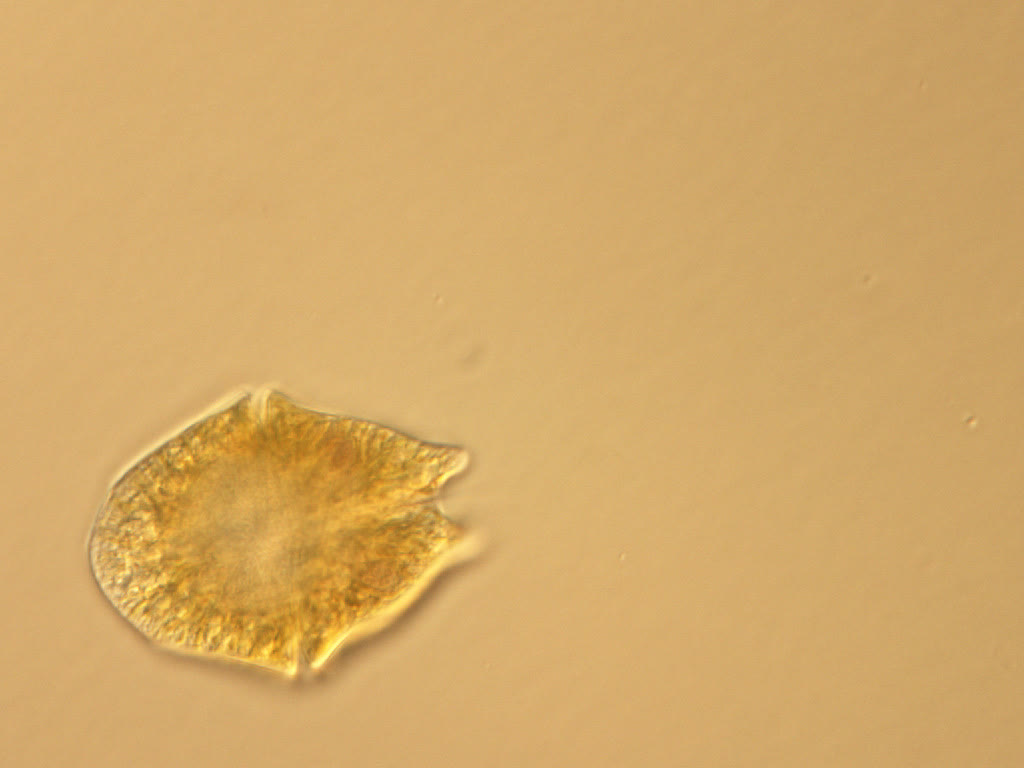
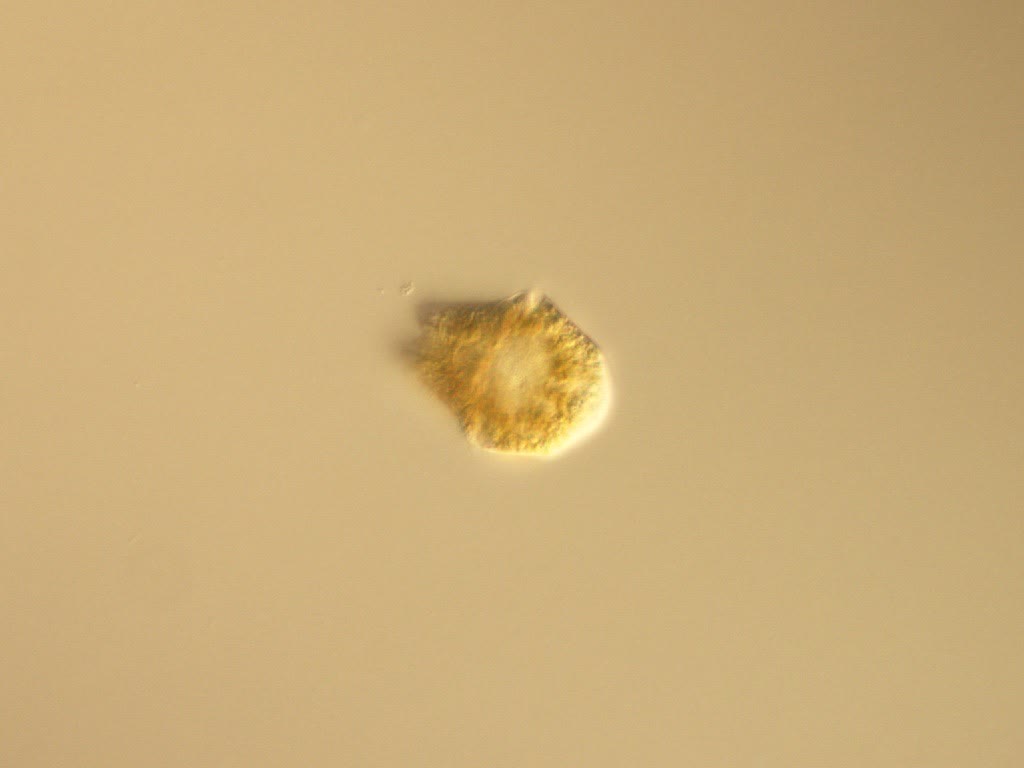
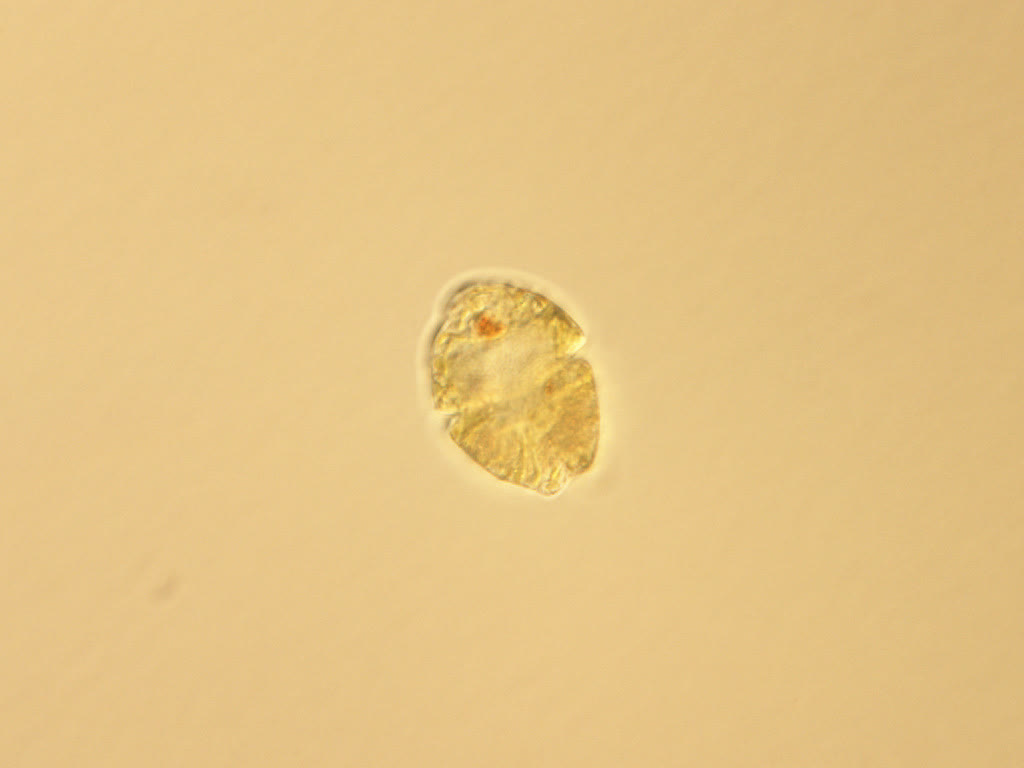
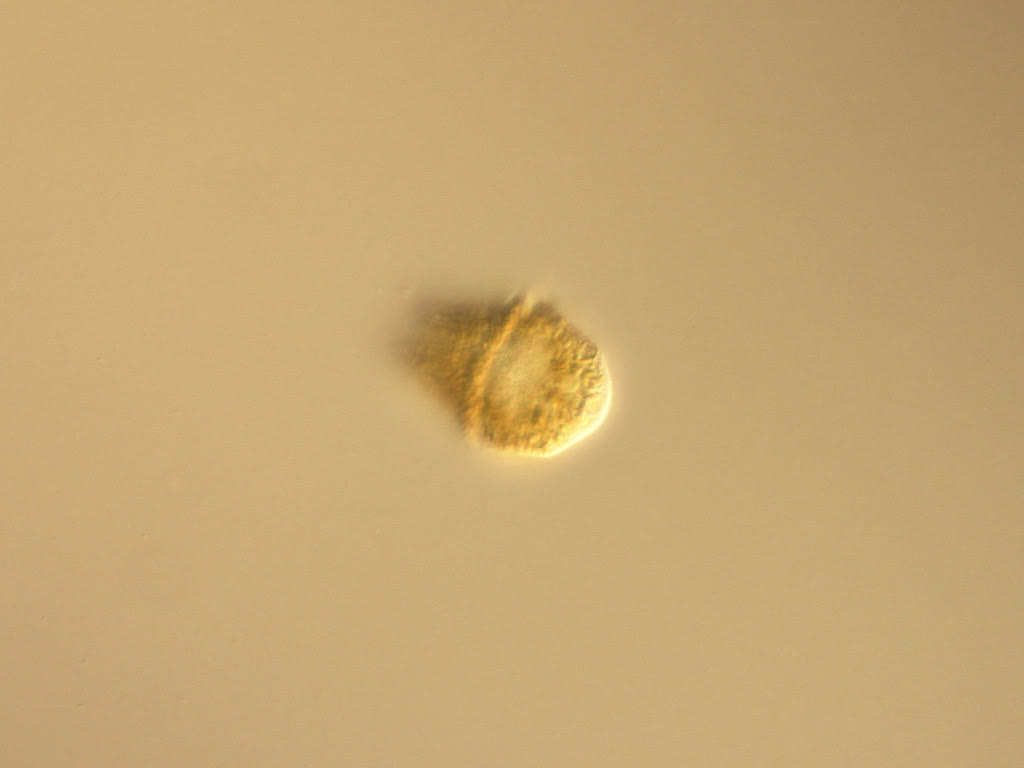
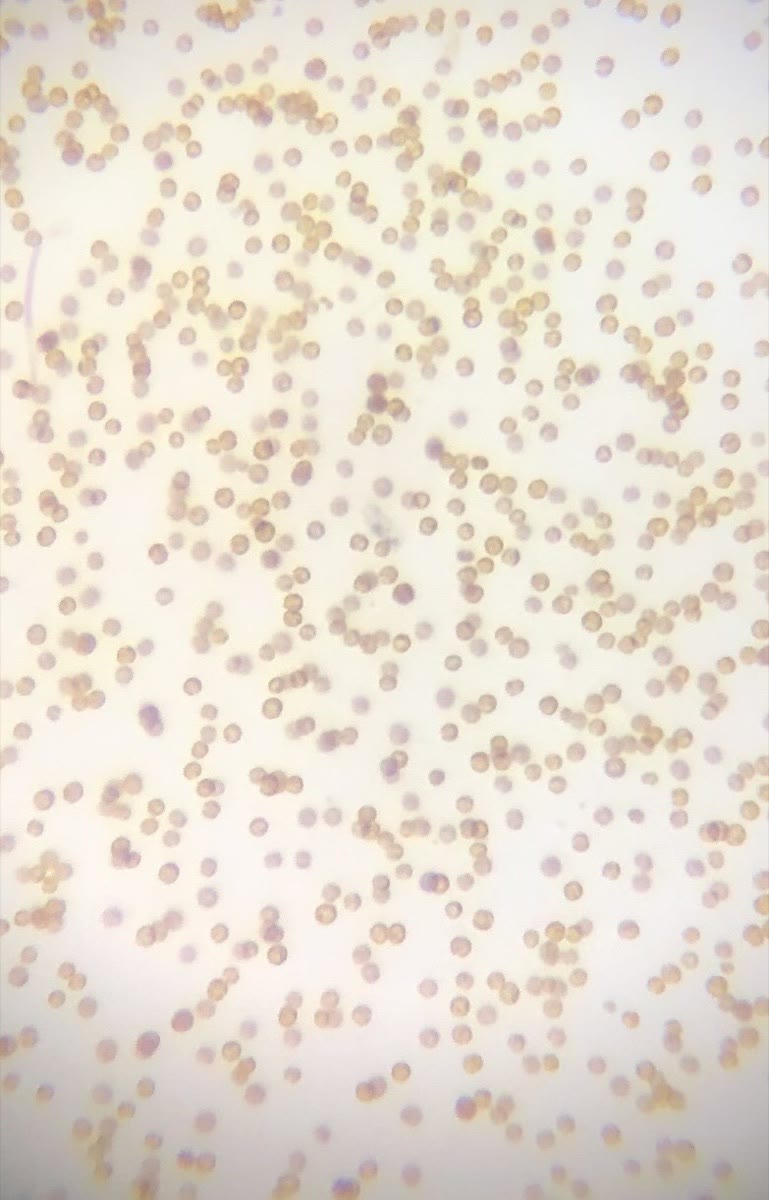
One of the four main pest dinos I find in home aquaria is small and very nondescript. When I give a lecture on what a dinoflagellate looks like and draw a simple schematic, it looks like this one. It tends to be suspended in thick mucus and does not move much relative to the other species, and it is often non-motile.
I cannot give it a name. I would need a scanning electron micrograph or DNA sequences. A student of mine once extracted DNA from one of these, which confirmed it was a dinoflagellate, but we never sequenced it. The cells are small, round, and golden-brown. Informally I have called them "Symbiodinium-like" because of how they look, but that is only a description, not an identification, and I do not know how closely related they are.
It has a very standard dino shape, but it is so small that there are few features to go on. It can also be hard to tell apart from Gambierdiscus when you cannot judge the size. Gambierdiscus is much larger, and its outline is not quite a perfect circle: there is a small step where the ends of the outline do not meet, which is where the sulcus meets the cingulum (the cingulum runs around the rim).
How to tell it is a dino: look for the T
These plain golden cells do not have many features, but there is one that gives them away. As you focus up and down through a cell, you will often see a T shape on its surface, as if someone had stamped the cell with a T. That is where the cingulum meets the sulcus: the cingulum is the groove around the cell (the bar of the T), and the sulcus is the groove running down from it (the stem). Use the fine focus slowly, because the T only shows at the surface. See how to focus through a cell.
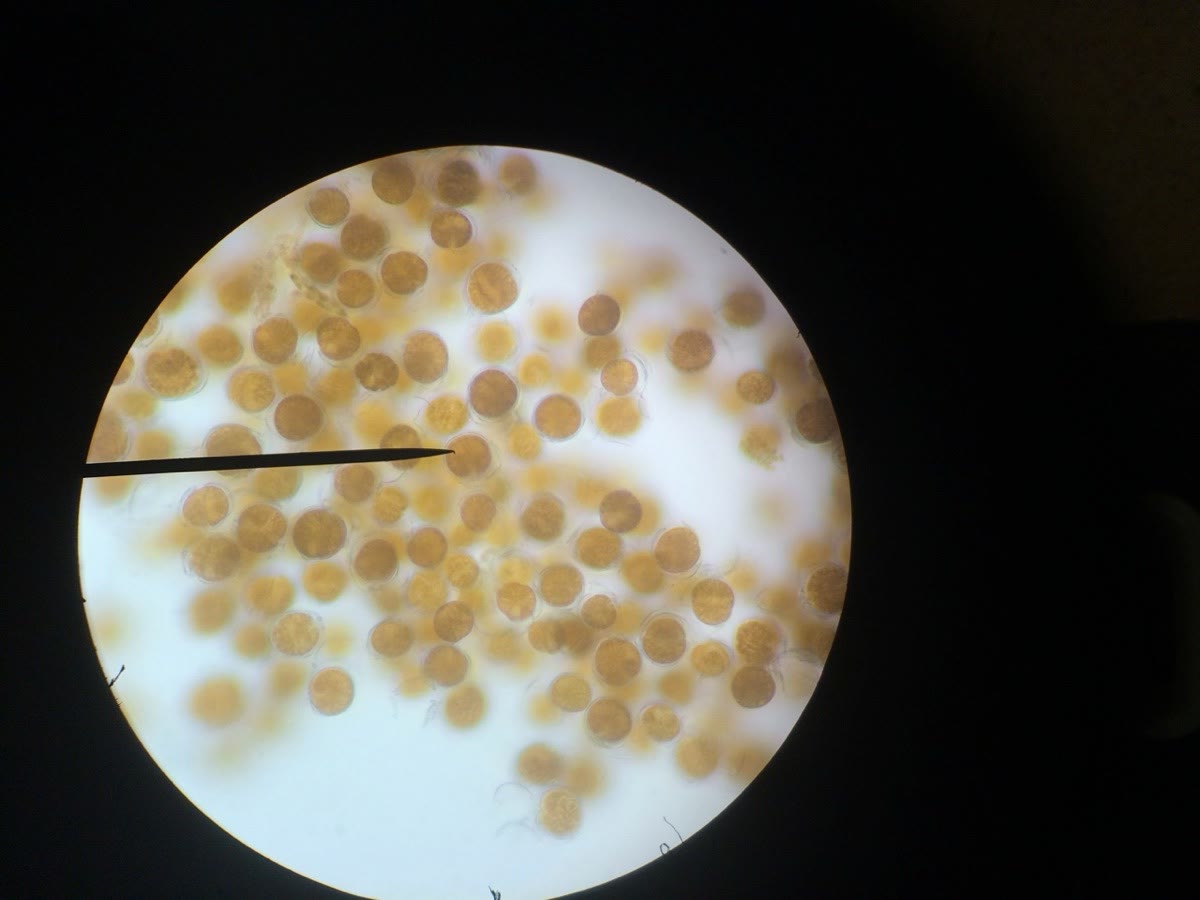
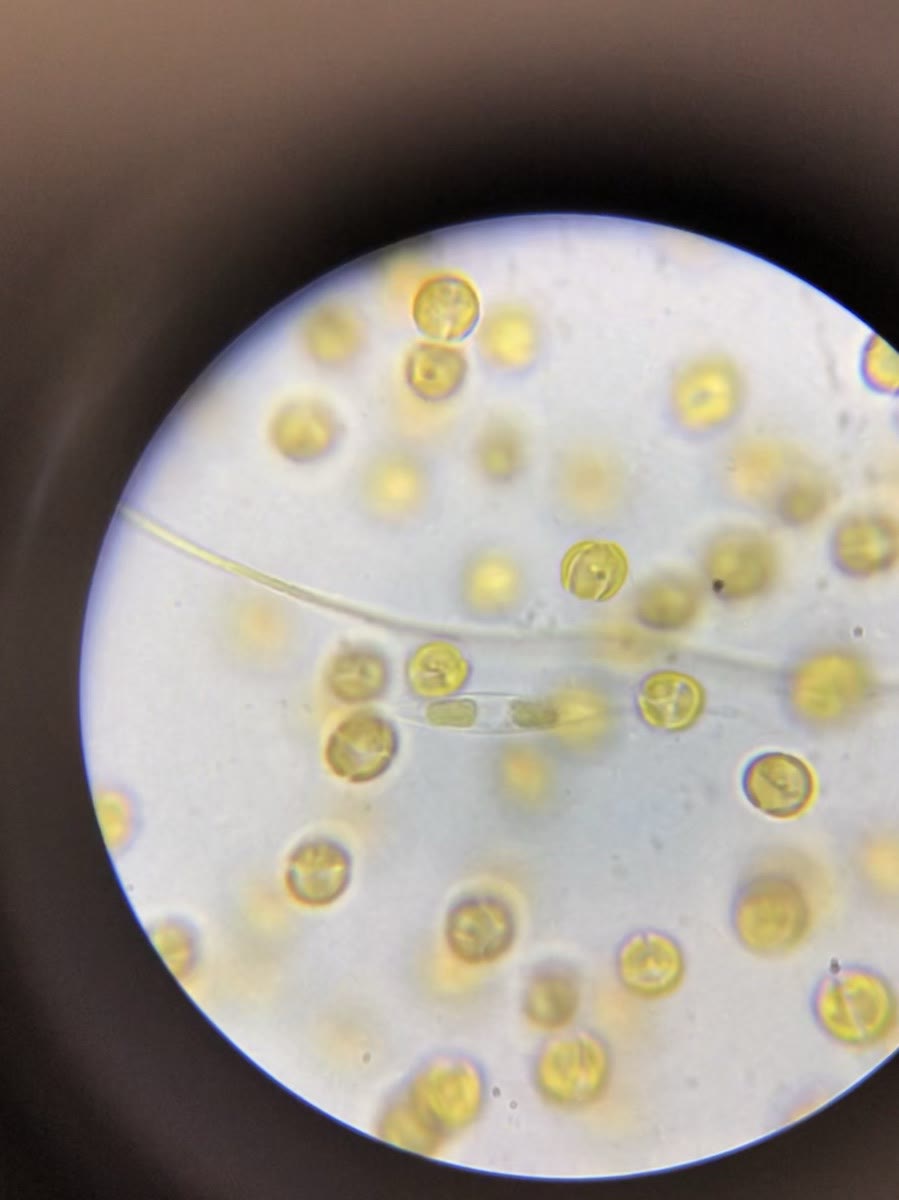
A spinning dino from another aquarist's microscope
A hobbyist sent me this one at 1000X. I could see a cingulum and sulcus, so it is a dinoflagellate, but it was only a few cells among many other things and not the problem organism.
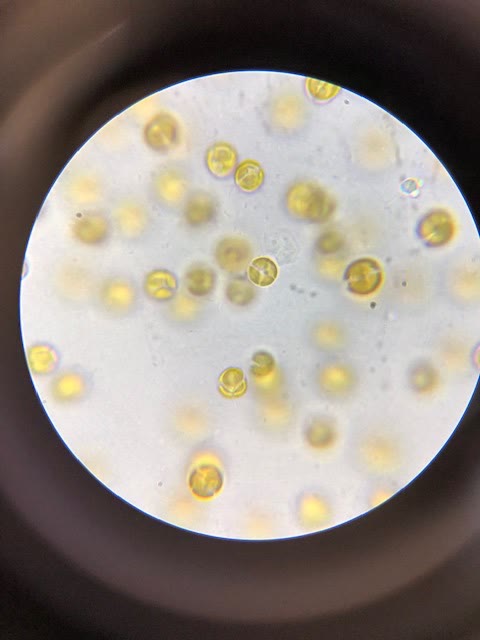
For comparison: Symbiodinium
A free-living culture of Symbiodinium, the algae that live inside corals, is shown here for comparison:
Possibly Coolia or Alexandrium
In 2020 a reef shop sent me pictures of a dino that covered rock and sponges with a dusty film that came back within a day of cleaning. I could not identify it from the pictures. It was probably either Alexandrium or Coolia. I would need a better idea of the size and a close look at the thecal plates to know. Both are toxic and both form cysts. Alexandrium makes saxitoxins, which cause paralytic shellfish poisoning in the wild.
About Coolia. Coolia is a benthic, toxin-forming dinoflagellate, so it is a plausible aquarium pest. It is known to be toxic, although little is understood about its toxins and the specific compounds differ from species to species (a compound called cooliatoxin has been described). The difficulty is identification. The cells are small and have a very ordinary dinoflagellate shape: a round ball with the cingulum around the middle. Fluorescence makes it a little more distinct, but identifying it with confidence takes a lot of care, and that is hard to do with a home microscope. Because many small dinos look like this, I would treat any Coolia identification from photos alone as tentative, rather than assuming that every tiny, nondescript dino is Coolia. I have not confirmed it myself.
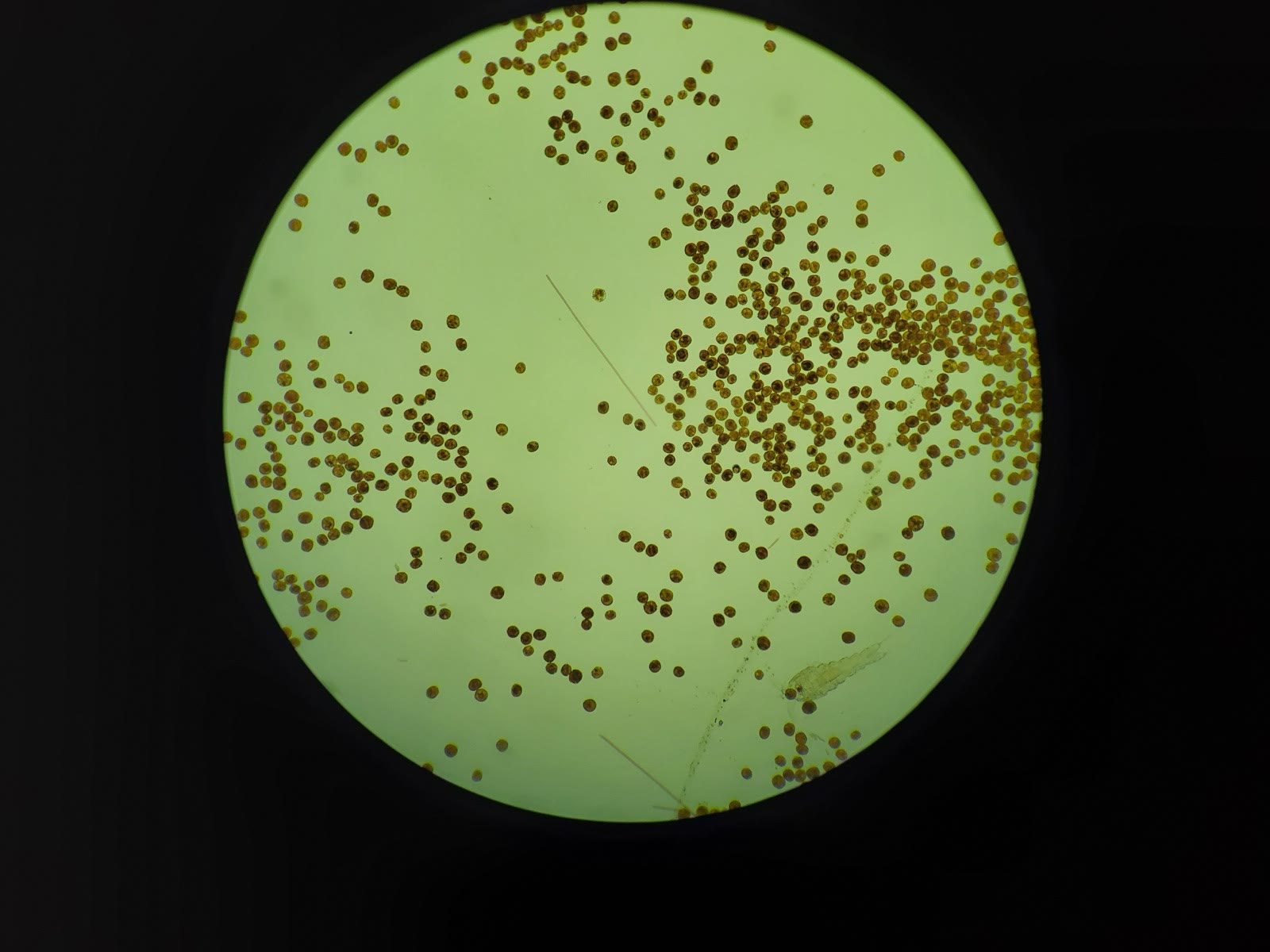
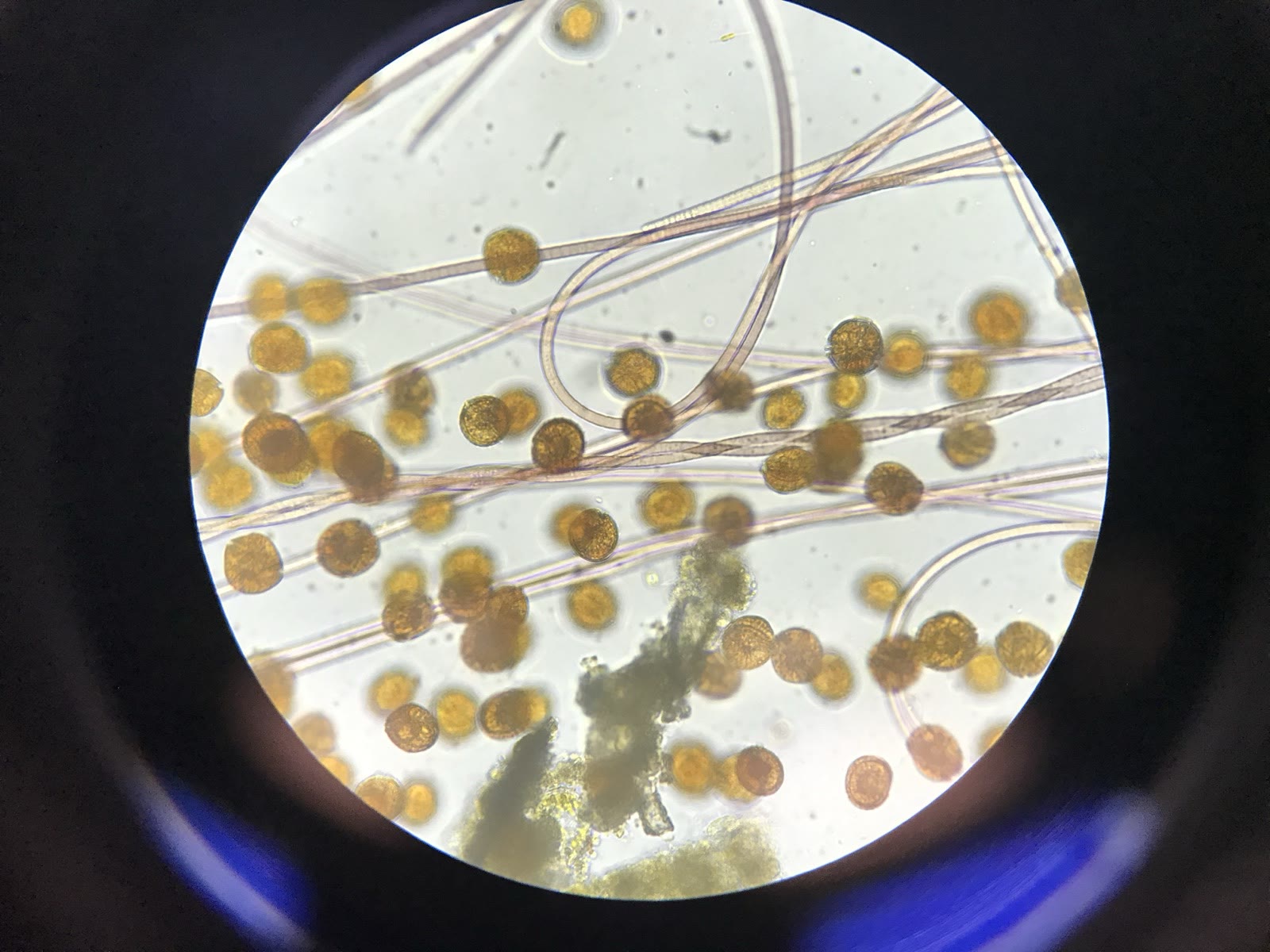
Akashiwo sanguinea
A large, naked dinoflagellate included here as a reference image. It is a coastal planktonic species rather than a typical aquarium pest.