ID guide › Dinoflagellates
Amphidinium sp.
Be careful when killing it. The scientific literature describes Amphidinium as only mildly toxic, but aquarists and aquaculture workers I have spoken to have had real health problems while trying to exterminate it. Ventilate, run carbon, and remove as much biomass as you can by hand first. See the safety notes.
How to recognize it
- Movement. These cells like to move along surfaces rather than swim up in the water. If you give them time to settle on a slide or dish, nearly all of them will be seen sliding smoothly across the glass.
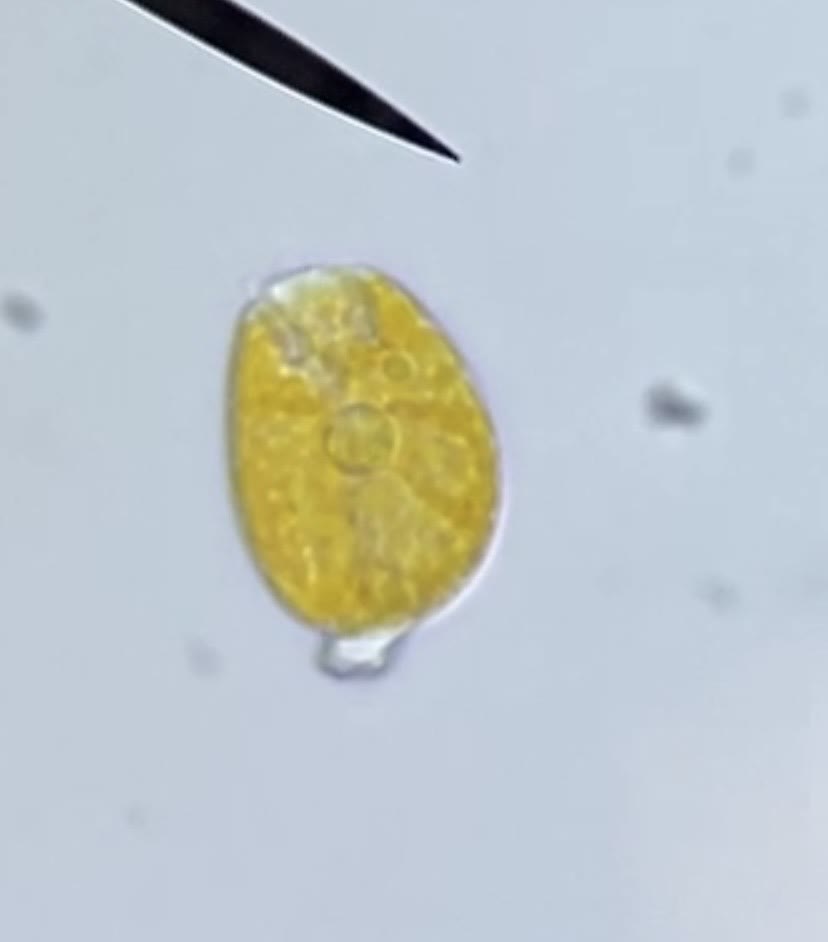
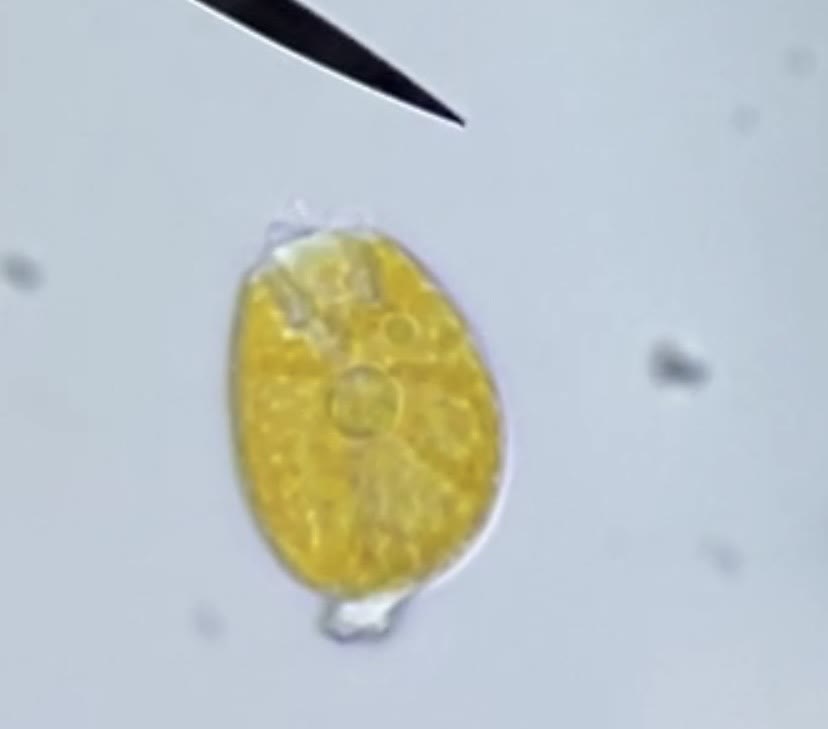
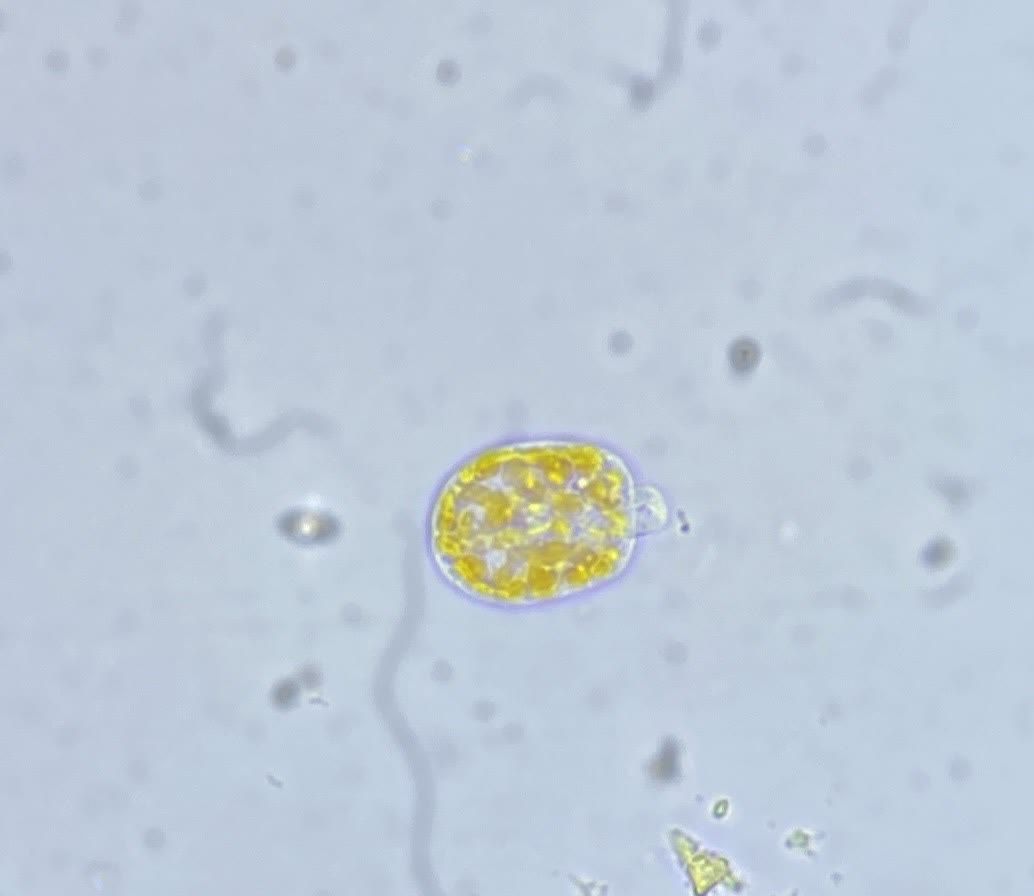
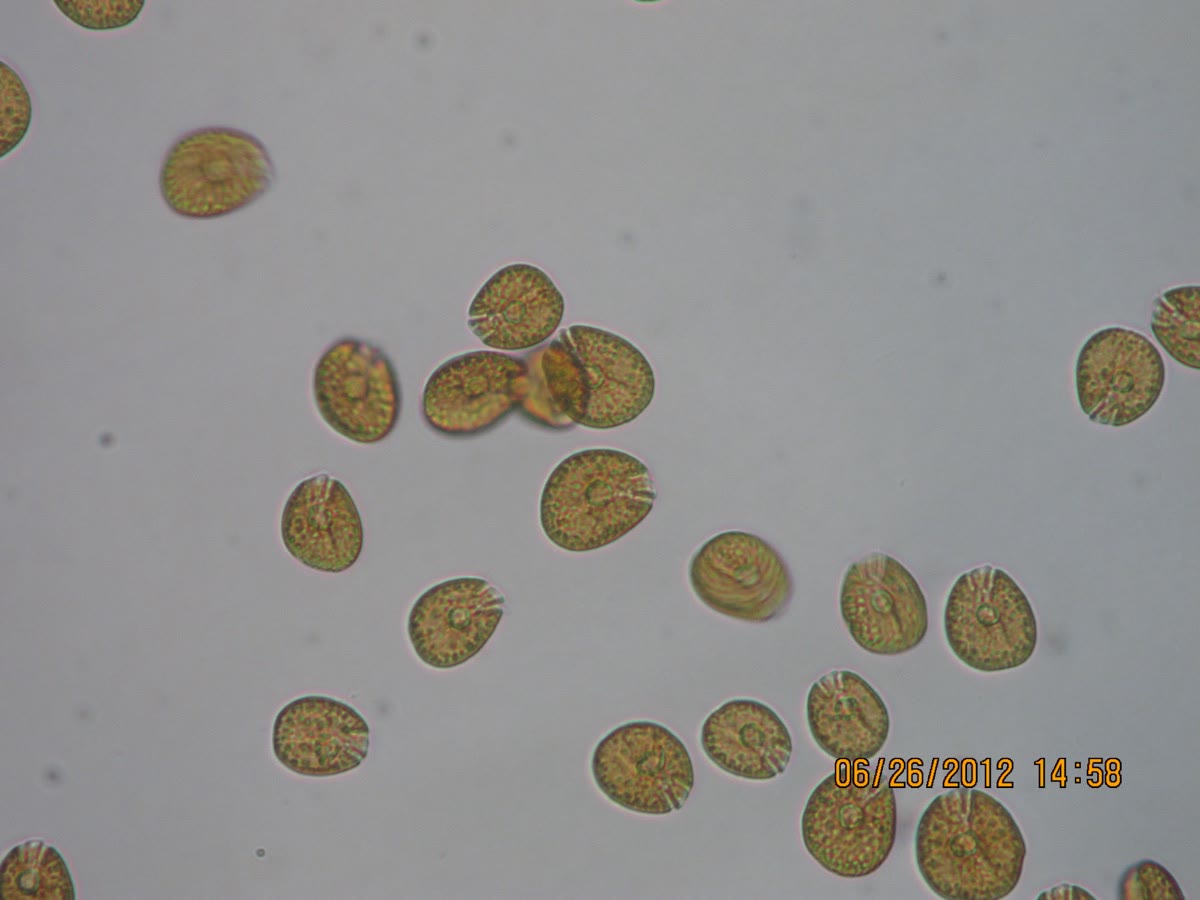
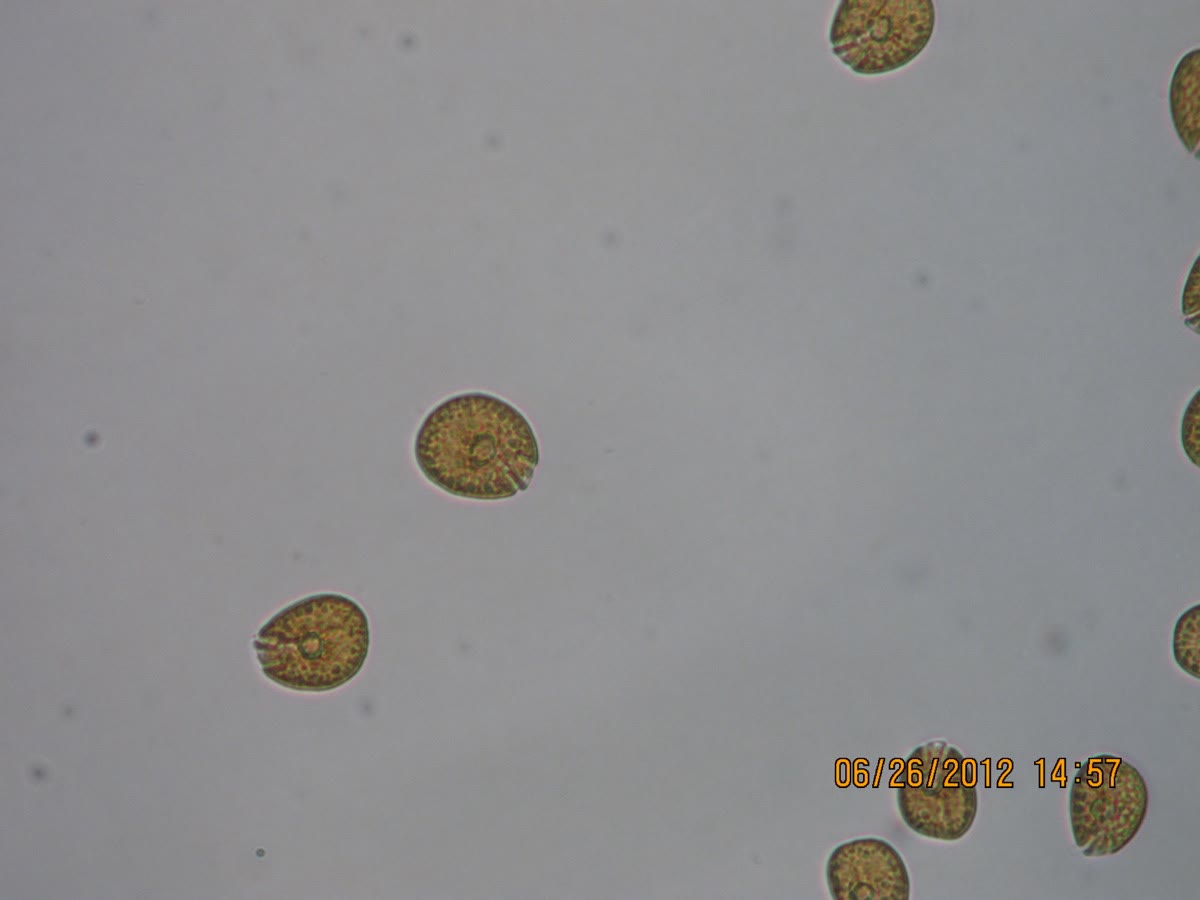
- Shape. Like Ostreopsis, they are sesame-seed shaped, but they move differently and are generally much smaller. The small-cell form is also smaller than Prorocentrum, but the large-cell form (see below) can be close to it in size, so do not rely on size alone.
- The apex. Look for two narrow grooves or folds at the top of the cell. A typical dinoflagellate has a groove running around the middle of the cell. In Amphidinium that groove has moved to the very top, so only a small piece of the cell sits in the "northern hemisphere", which gives the cell a cap-like look. It can look a bit like the Millennium Falcon.
- Inside. A large central pyrenoid and a branching chloroplast that fills the cell.
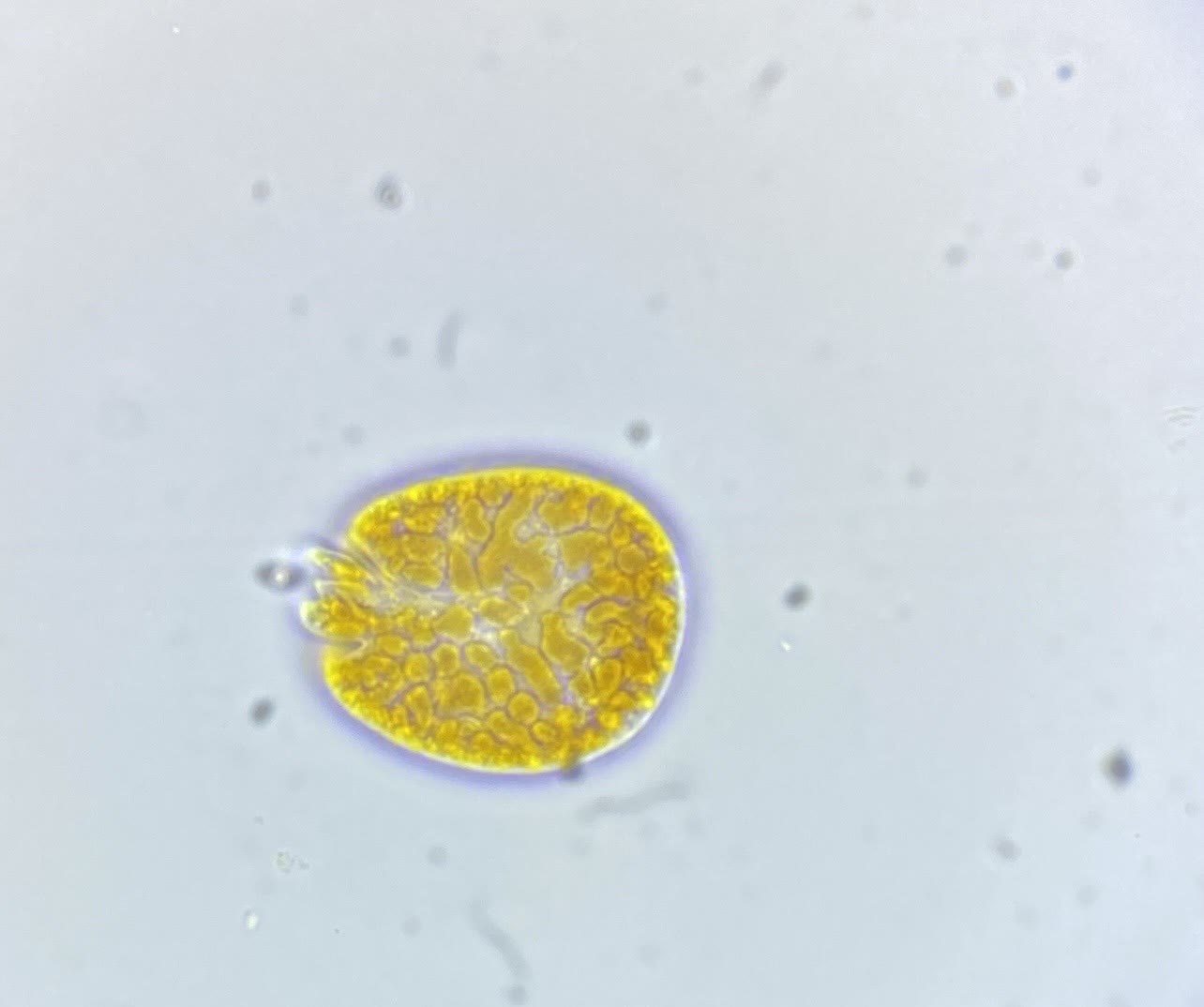
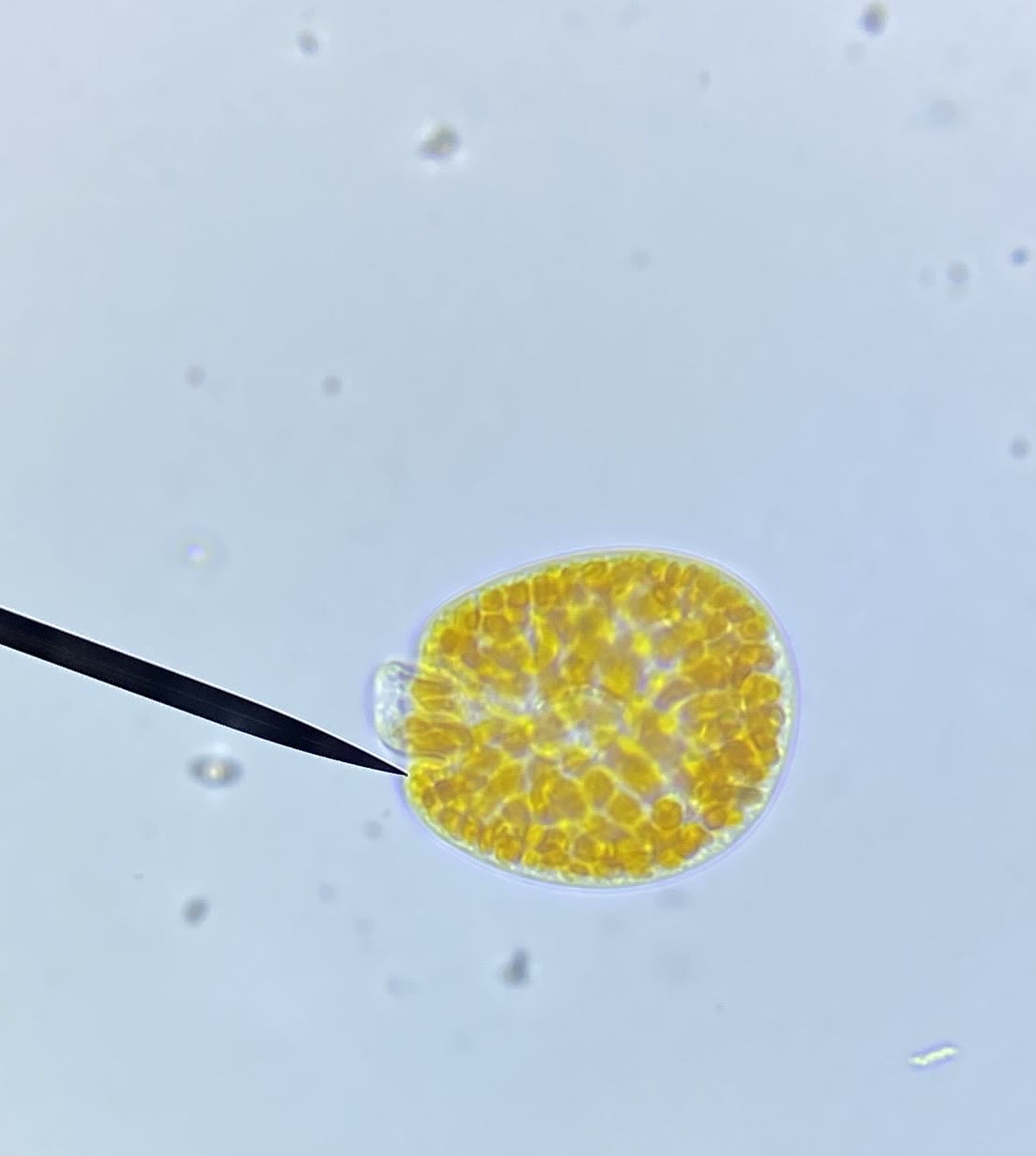
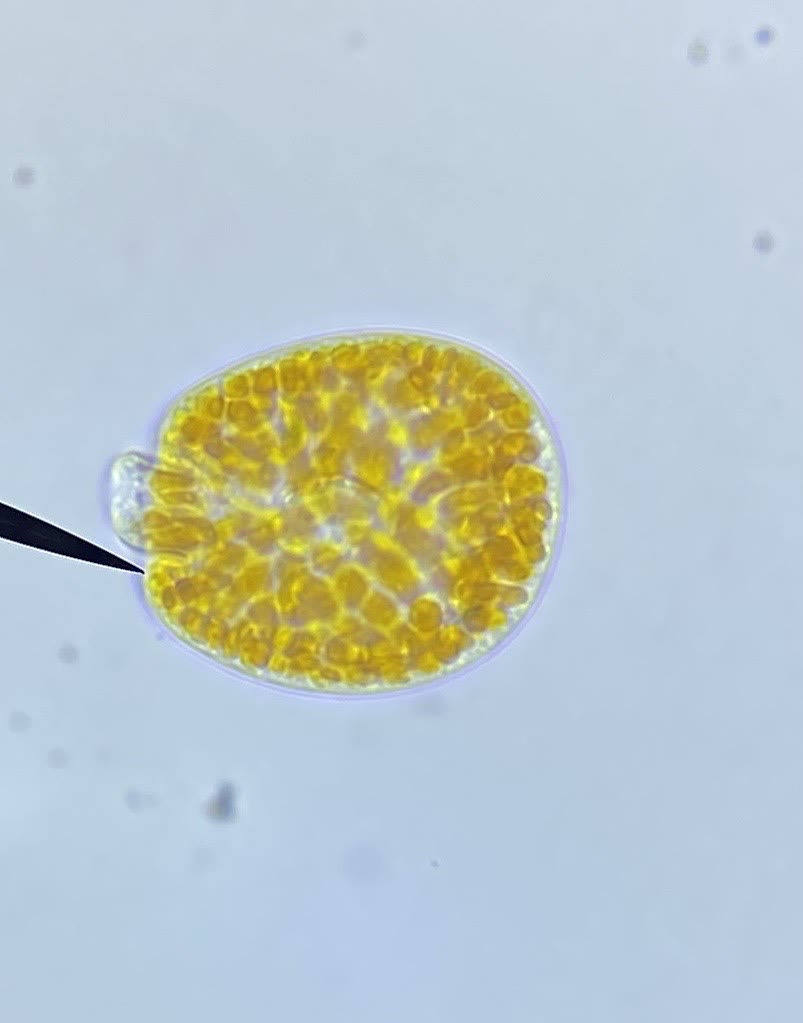
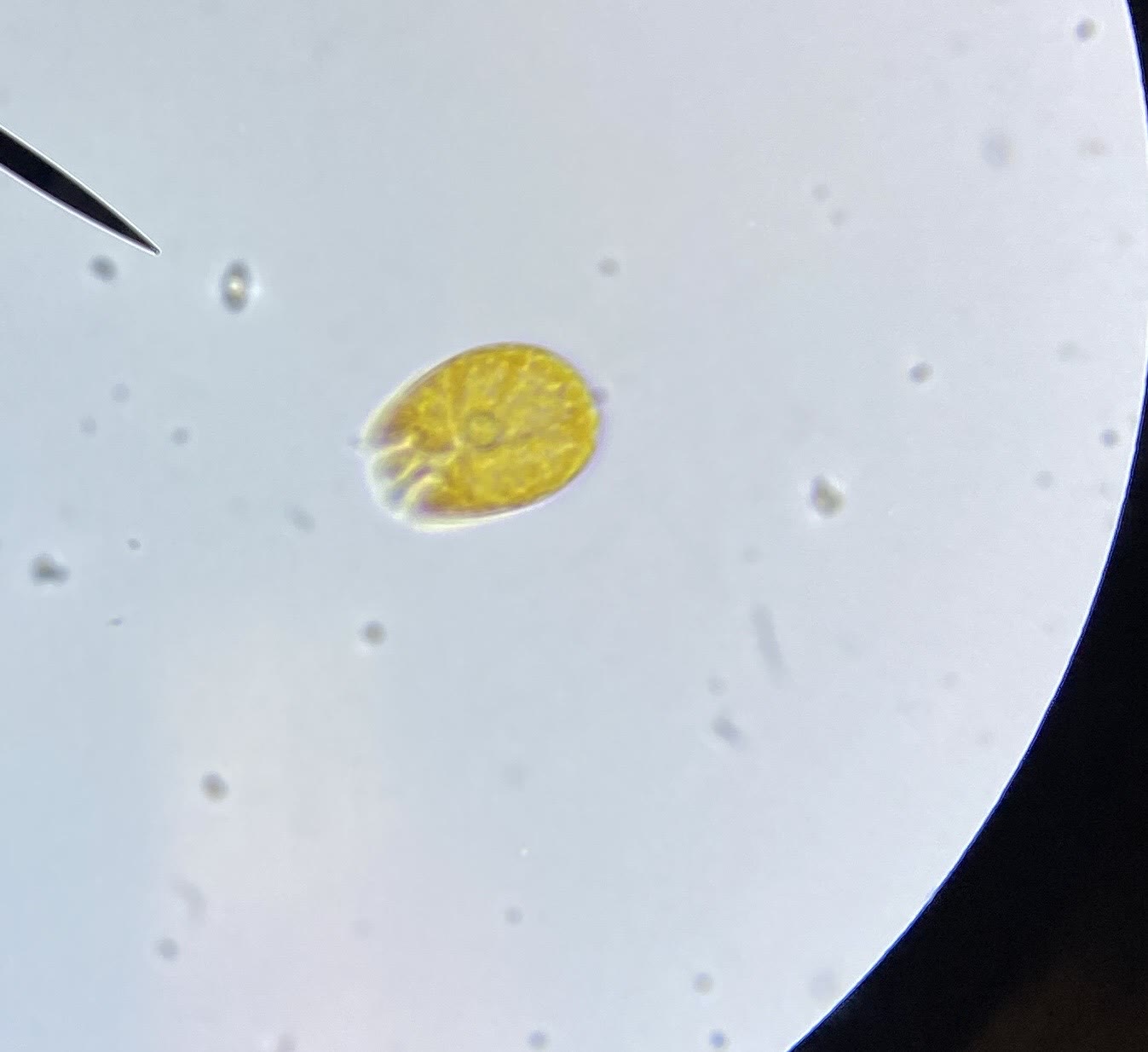
Videos
Motion matters, so please watch these before you decide. The last one is the best view of the apex.
Large-cell and small-cell forms
Aquarists who have compared notes separate two kinds of Amphidinium:
- Large-cell Amphidinium (roughly 30 to 60 µm) is the one in most of the photos on this page. It glides along sand and rock and tends to stay near the bottom.
- Small-cell Amphidinium (roughly 10 to 15 µm) is a much faster swimmer and spreads to every surface. It is less often reported.
That is why I sometimes quote a much smaller size for Amphidinium in emails. Both sizes are approximate. The Dinoflagellate Guide has photos of both.
Videos from other aquarists
Other hobbyists have shared videos of their Amphidinium with me. Compare how the cells glide with my videos above.
Which species?
Almost no Amphidinium in aquaria can be named to species by light microscopy. They have no thecal plates (they are "naked"), and plates are what most dinoflagellate taxonomy rests on. Most isolates get dropped into Amphidinium carterae, which in the literature is probably many different closely related species under one name. If you read about "A. carterae", keep that in mind. Some of the ones I have seen look more like A. massartii. The genus may not even be a single natural group.
Toxins
Amphidinium makes toxins called amphidinols. They break down very rapidly, which makes them hard to detect after a bloom has collapsed.
Natural enemies
Ciliates and a predatory protist, Oxyrrhis marina, eat Amphidinium. This video shows Oxyrrhis going after A. carterae (not my best video, but watch closely):
See ciliates and the treatment page. A blackout can reduce numbers but is unlikely to get rid of them permanently.