Buying or borrowing a microscope
Cartoons. Hand lenses and stereo scopes are not microscopes: they show you the big picture.
A hand lens
A small hand lens is enough to tell filamentous from single-celled algae, which helps you tell cyanobacteria from a dinoflagellate. The best hand lenses are made of glass and built from several bonded elements. Look for the word triplet. Be wary of hand lenses sold at more than 10X that do not say they are bonded. They may claim up to 60X, but their resolution will not be good enough to see the fine details needed for identification.
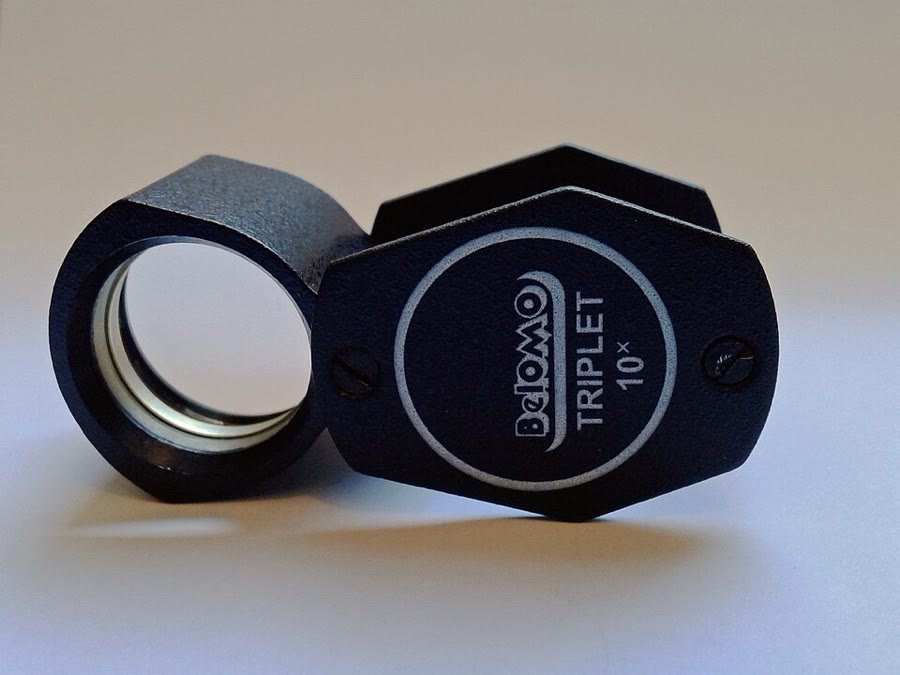

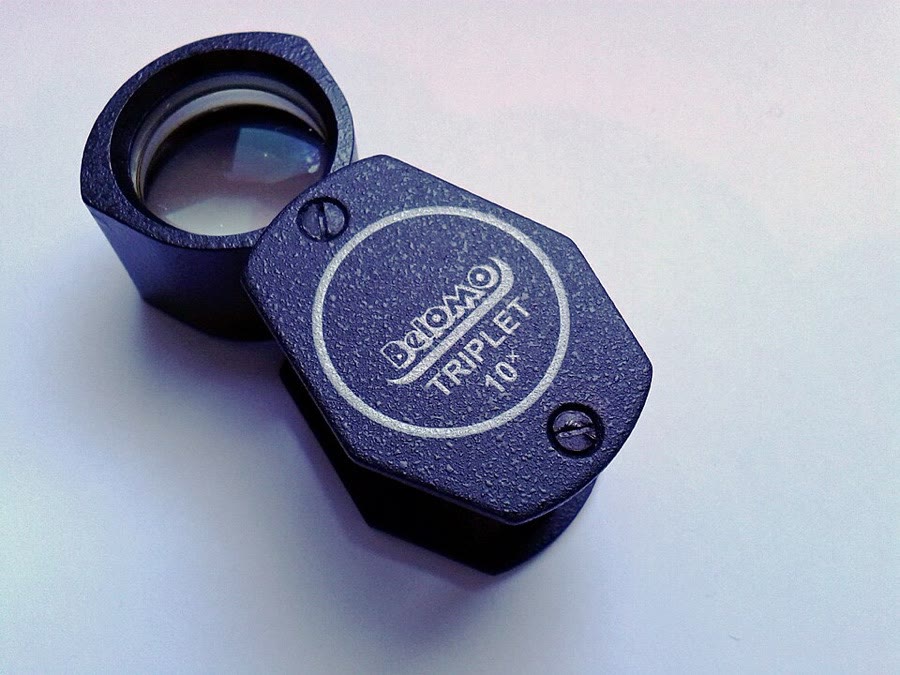

A microscope
To tell types of single-celled pest algae apart you need more magnification. I recommend a used compound microscope.
- A monocular scope may be easier for children and beginners than a binocular one.
- I do not recommend a dissecting (stereo) microscope as your only scope for identifying algae, though it is excellent for checking corals and fish. If you buy one, get a light source with it.
- Objectives: at least two. One low (2X to 10X or 20X) and one around 40X. Magnification is the objective times the eyepiece, which is usually 10X, so a 40X objective gives 400X. Objectives above 40X (for example 100X) need immersion oil, so ignore those unless you have experience with oil.
Buying used
For anyone other than a large institution, it is best to buy used. I have bought a couple of Zeiss microscopes for home use for under $100 each from university surplus. A good price is generally $100 to $200.
- University surplus. Most universities have a store near campus that sells old furniture and equipment, or they use local surplus stores or auction vendors. It can take some sleuthing to find out how your local university unloads used lab equipment. Prices tend to be best in the summer.
- What to look for. Student scopes used in microbiology courses are ideal: they are good enough to see things like gram stains, and universities unload many at once. Zeiss Axiostar is my favorite used scope, but Leica, Olympus, and Nikon should all be considered. Stick to the big-name brands.
- Bring a test slide. A prepared slide (where to get them), or just a slide with some marker or crayon on it, and some lens cleaner. Plug it in and make sure it works, and check that you can set up Köhler illumination and focus.
- Inspect the optics. Check for scratches versus plain dirt (students get immersion oil on everything). Look for dents or big scratches that suggest it was dropped.
- Complete? Many scopes are sold without objectives, stage, eyepieces, or a light source. The objectives are the most expensive part, so price everything out if you try to assemble a scope from parts. For objectives, look for a 4X and something in the 10 to 20X range. If you want to see bacteria or very fine detail you will need an oil-immersion objective.
- Online. eBay and other auction sites can have amazing deals, but there is more risk since you cannot test the equipment. Look for guarantees that the scope has been tested and is working, and for words like "refurbished", "serviced", or "cleaned". The more expensive vendors who specialize in refurbishing and warranties are a safer choice. Look at the pictures for missing parts.
Slides, cover slips, and a few extras
- Glass slides and glass cover slips, not plastic. Glass gives a clearer picture and does not scratch as easily.
- Get the larger rectangular cover slips, not just the tiny square ones. Common sizes are 22 × 40, 24 × 50, or 24 × 60 mm. Beginners tend to use too much water, and a bigger cover slip spreads a small drop out thin so that less spills out the sides.
- Look for No. 1.5 thickness (about 0.17 mm), the standard that most microscope objectives are designed for.
- A few plastic transfer pipettes, some small clean vials or cups, lens cleaner and lens paper, tissues for blotting, and a crayon (see focusing).
Where to buy supplies
This changes over time, and I have no connection to any of these sellers, so check prices and availability yourself.
- Education and hobby suppliers. These sell to individuals. Carolina Biological Supply mostly serves schools but is also friendly to homeschoolers (choose glass, since they sell plastic slides too). Home Science Tools sells prepared slides. AmScope and similar microscope makers sell accessory kits, and the Microbehunter accessories guide is written by hobbyist microscopists.
- Online marketplaces (Amazon, eBay, Walmart) carry slide, cover slip, and pipette kits. Read the listing carefully: many kits come with only the small square cover slips, and some slides are plastic. Search for "rectangular cover glass 22x40" or "24x50", and "No. 1.5".
- A friend with access to a school, university, or clinic may be able to order a box for you or share a few.
For testing a used microscope, buy two or three inexpensive prepared slides with fine detail (a stained tissue or plant cross-section, for example). They are also good for practicing your focusing before you try a live sample.
Borrowing one
If you have a pest you want identified and cannot buy a microscope, consider borrowing one.
- A high school biology teacher is often a good person to ask. Most are enthusiastic about biology and will welcome a polite request to look at something with you.
- A university professor whose interests involve algae, marine biology, or microbiology. Be polite and respectful of their time, since they often receive many unsolicited emails.
- A veterinarian. Most vet clinics keep a microscope for skin, fecal, and blood tests, and vets who treat fish or exotic pets tend to enjoy looking at something unusual. Call ahead, ask if they would be willing to look at a sample (or take a few pictures of it through the scope), and bring it in a small container of tank water. Try to go at a quiet time of day.
Next: setting it up, then samples, slides, and pictures.